
Services
Three ways I work with teams.
Decision-grade dashboards you can defend in a meeting, forensic data analysis for when a number is wrong, and data science that makes its uncertainty visible instead of hiding it.
Highlighted
Dashboards
Not scoreboards — working surfaces. Each number carries its definition, its exclusions, and a readout of how confident anyone should be in it. Built for property, operations and business leaders who need to act on what they see.
-
Multifamily Property Management
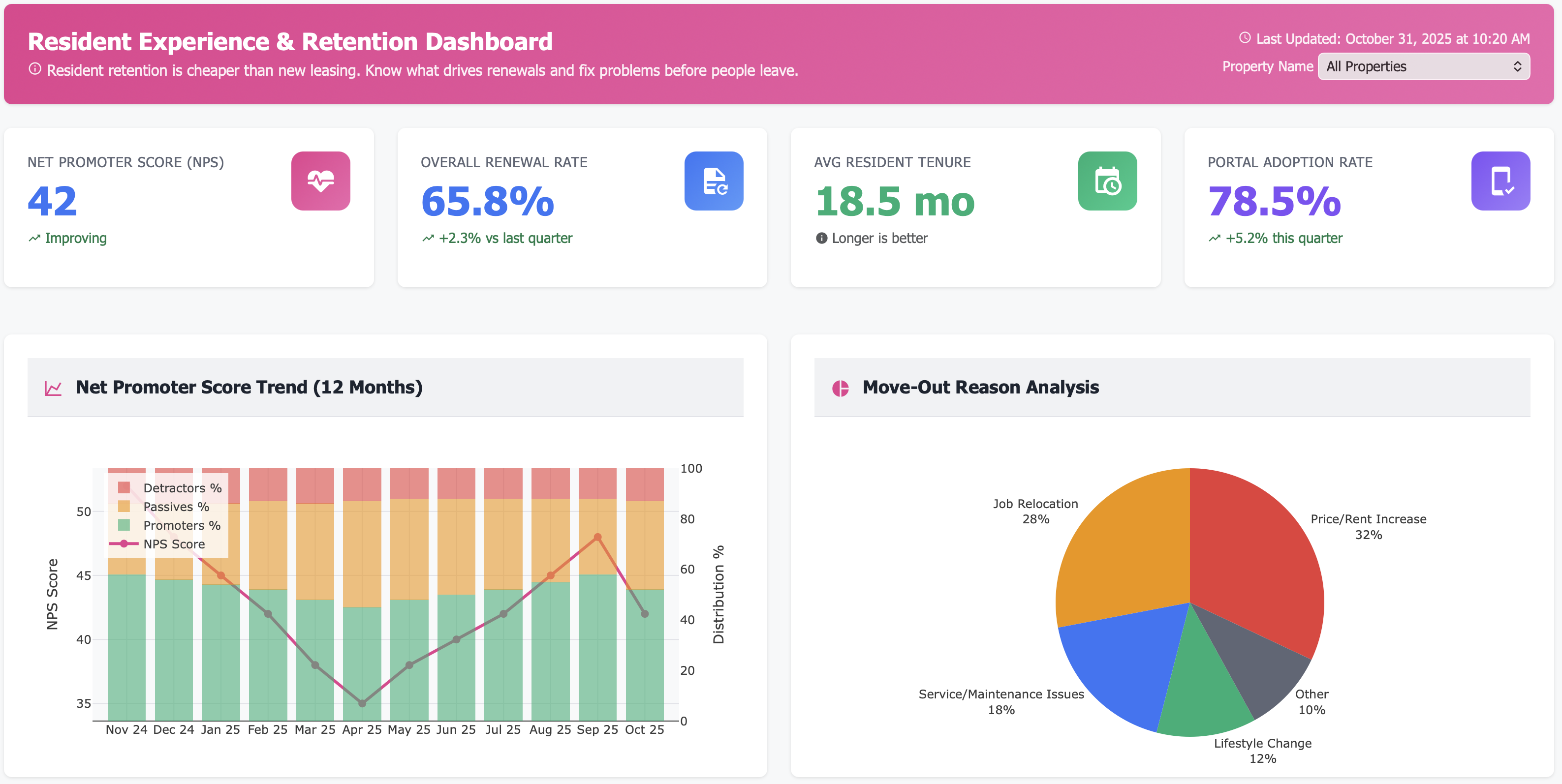
Residents Experience and Retention Dashboard
Track renewal rates by cohort and segment, understand why residents leave (controllable vs. uncontrollable), calculate lifetime value to focus high-ROI retention efforts, and measure which communications actually drive renewals. Most portfolios improve renewal rates 5-10 percentage points, protecting $500K-$1M+ annually per 500 units.
View dashboard → -
Business
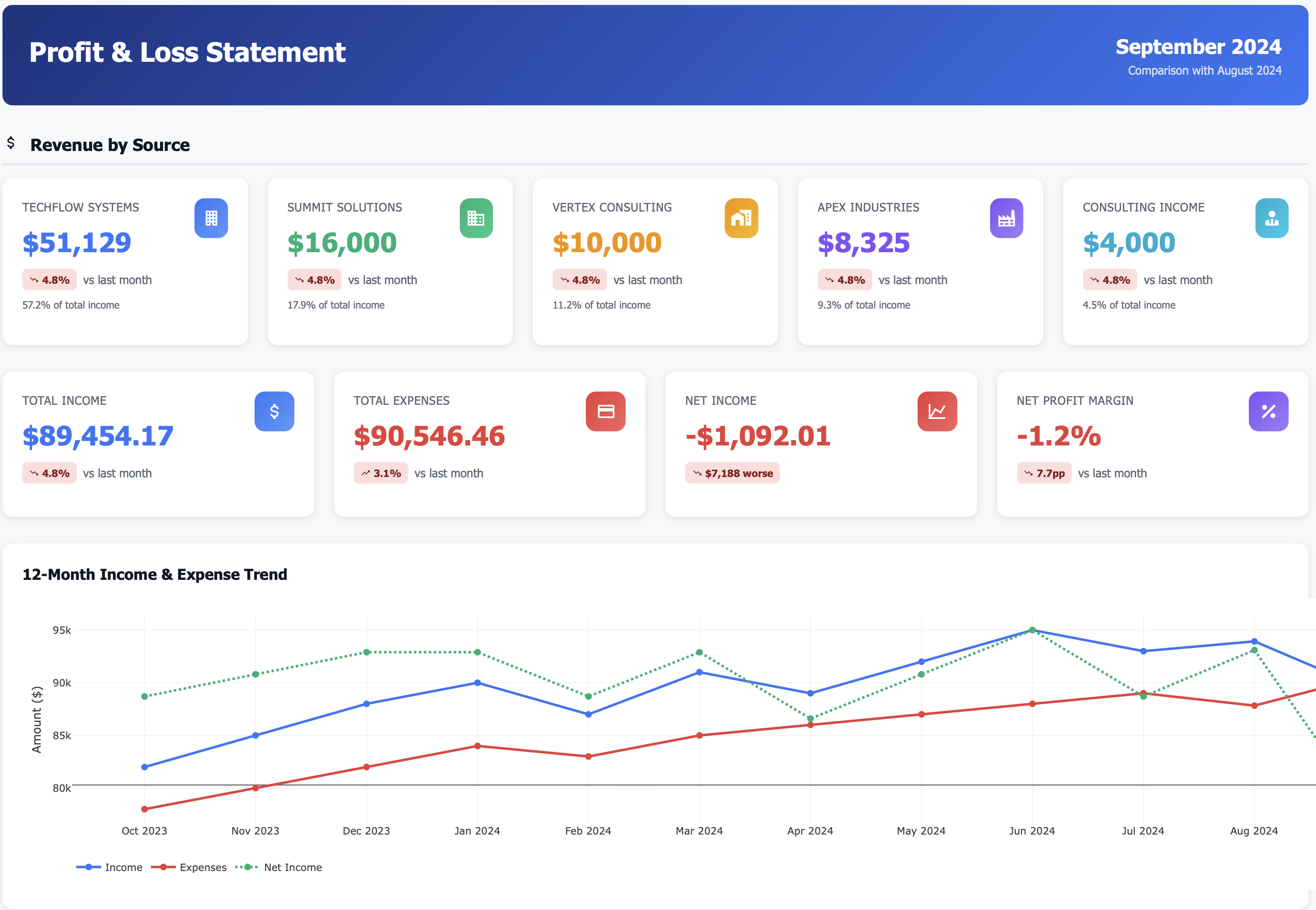
Profit & Loss Statement
For any business owner, knowing whether the business is profitable is essential. This dashboard tells you exactly that. With impeccable design, this will keep you informed.
View dashboard → -
Multifamily Property Management
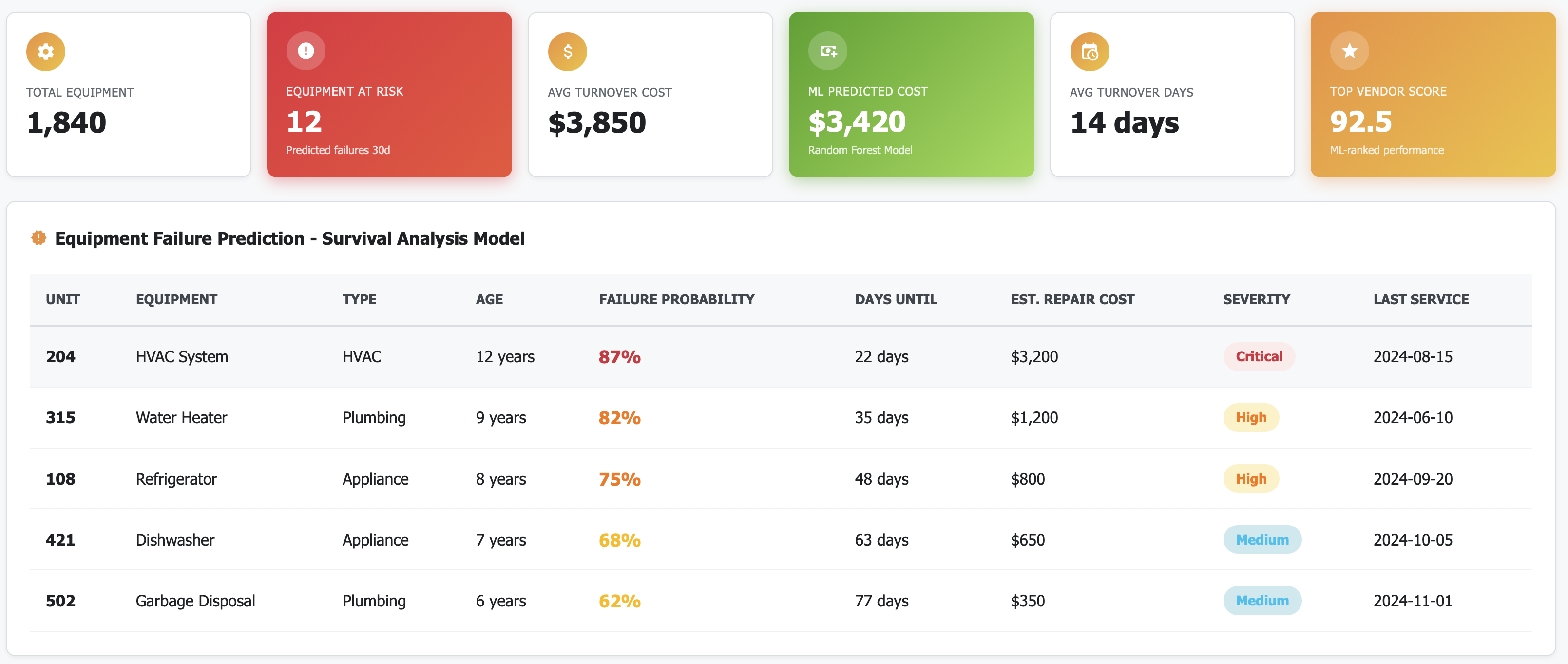
Predictive Maintenance and Turnover Dashboard
Track age and condition of every HVAC, water heater, appliance, and roof—see failures coming 12-24 months ahead. Standardize turnover scopes, track upgrade ROI, schedule preventive maintenance, and shift from reactive to proactive. Most portfolios reduce maintenance costs 30-50% ($150K-$400K annually per 500 units) through planned replacements and PM compliance.
View dashboard →
Service
Data analysis
Most times someone calls me, a number is wrong and nobody can say why.
Not wrong in an obvious way. The report runs, the totals balance, and the figure is still not what anyone in the room believes. Two systems disagree by four percent. A metric moved and no decision explains it. Someone changed how a field was counted three years ago and the note that said so is gone.
That is the work. I take the number apart, trace it back through whatever produced it, and establish what the records can actually support.
What's included
- Reconstructing how the number was made. Which field it came from, who entered it, what got joined to what, which rows were dropped and whether anyone meant to drop them.
- Separating the mechanism from the correlation. Two things moving together is where the work starts, not where it ends. I keep going until there is an account of what is actually driving the result, or until it is clear the data cannot get you there.
- A written record that survives disagreement. The method, the exclusions, and the parts I am unsure about are written down alongside the conclusion, in language the person making the decision can follow.
Service
Data science
Models that make their uncertainty visible, not models that hide it.
Classification, regression, forecasting, anomaly detection — the techniques are not the point. The point is a model whose error is quantified, whose failure modes are named, and whose output a non-specialist can act on. If the honest answer is that the data cannot support a model yet, that is also an answer, and it comes early rather than late.
The method is drawn from scikit-learn, TensorFlow, PyTorch and the usual Python stack. The deliverable is a model plus the document that lets your team maintain, question, or retire it without me.
What's included
- Problem framing. What is being predicted, what success looks like, and what the cost of each kind of mistake is.
- Modelling with the uncertainty on the page. Confidence intervals, failure modes, calibration — things most dashboards hide, written down where they can be argued with.
- A handoff that actually hands off. Reproducible pipelines, documented assumptions, and a plain- English write-up of what the model does and does not know.
Have a number you don't trust?
Describe what you expected and what you got. If it looks answerable I'll tell you roughly what it would take, and whether I'm the right person for it.